Managing Fragmented Case Information
Funeral homes may rely on different tools and processes to manage case information, making it difficult to maintain one reliable view of an arrangement.
Oneora is a SaaS platform designed to help funeral homes manage the full funeral arrangement process from a single system. The platform brings together case intake, service scheduling, task workflows, documents, and family coordination, giving funeral directors and their teams a structured way to manage each arrangement.
We worked on Oneora's web and backend development, helping create a centralized platform that reduces fragmented processes, automates routine work, and gives teams better visibility into the status of every case.
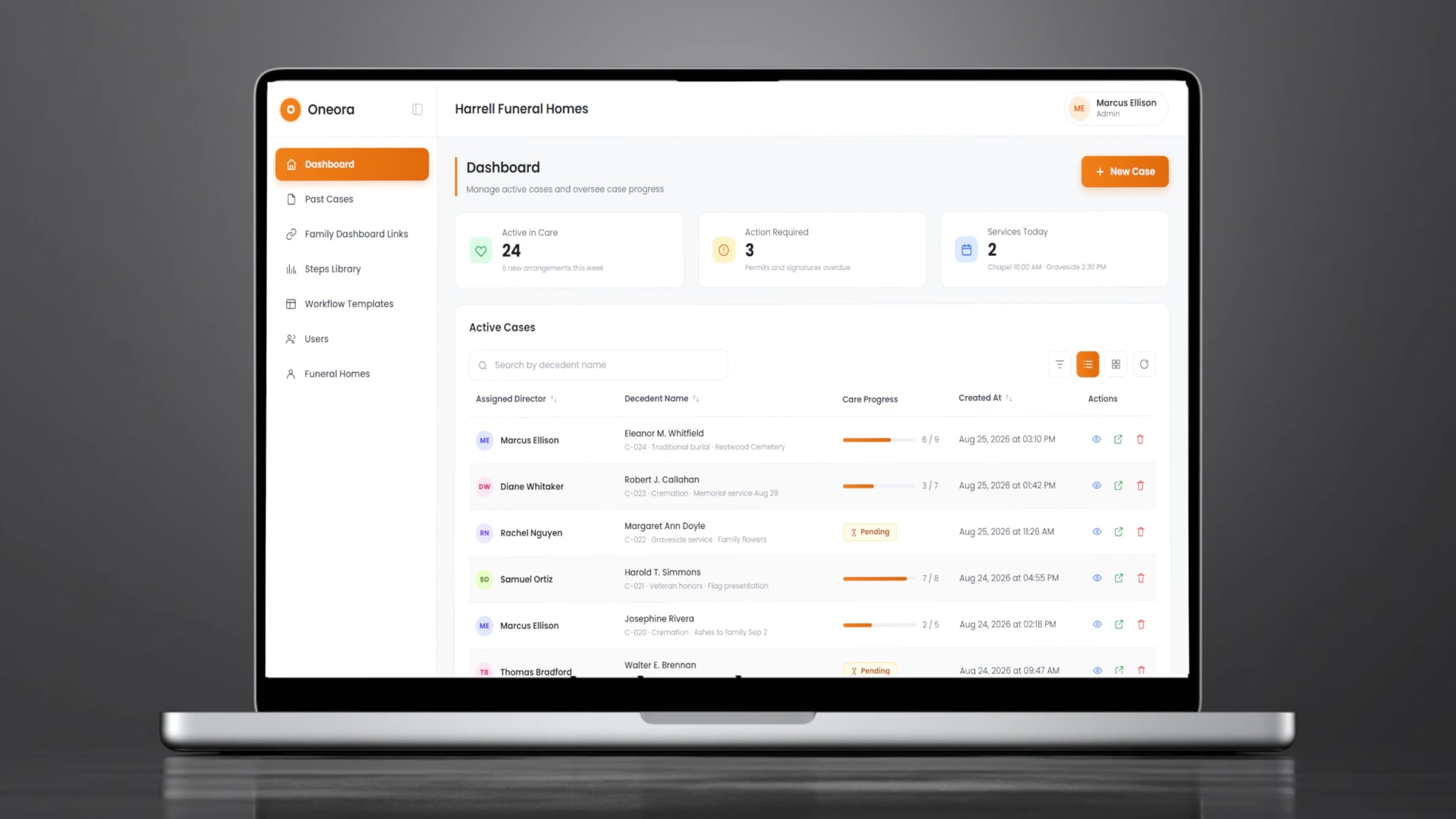
Managing a funeral arrangement involves multiple people, documents, tasks, schedules, and sensitive family communications. When these activities are handled through paper forms, spreadsheets, phone calls, and disconnected software, it becomes difficult for funeral directors to maintain a clear view of each case.
We worked on Oneora as a centralized funeral service management platform that brings the key parts of an arrangement into one connected system.
The platform gives funeral directors and staff a structured way to manage cases from intake through service completion, while helping automate routine steps and keep family coordination organized.
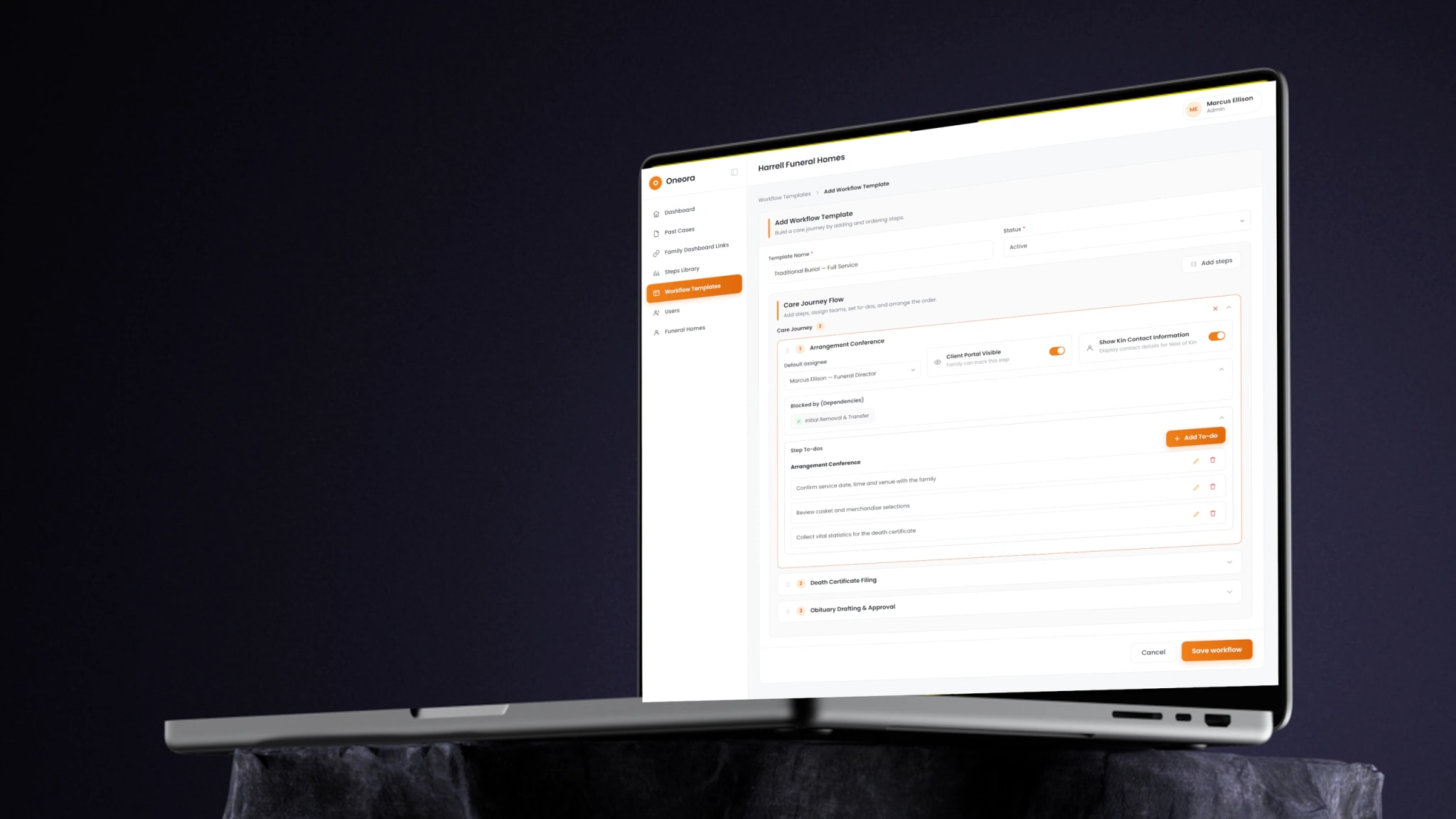
Funeral homes may rely on different tools and processes to manage case information, making it difficult to maintain one reliable view of an arrangement.
Funeral arrangements involve multiple steps that need to happen at the right time. Missing a task or important detail can create additional pressure for staff during an already sensitive process.
Funeral directors need to know the current status of each case without having to contact different members of the team or search through multiple systems.
Staff can spend considerable time checking tasks, communicating updates, finding documents, and following up on routine activities.
Keeping families informed requires careful communication throughout the arrangement process, while staff also need to manage the operational side of each case.
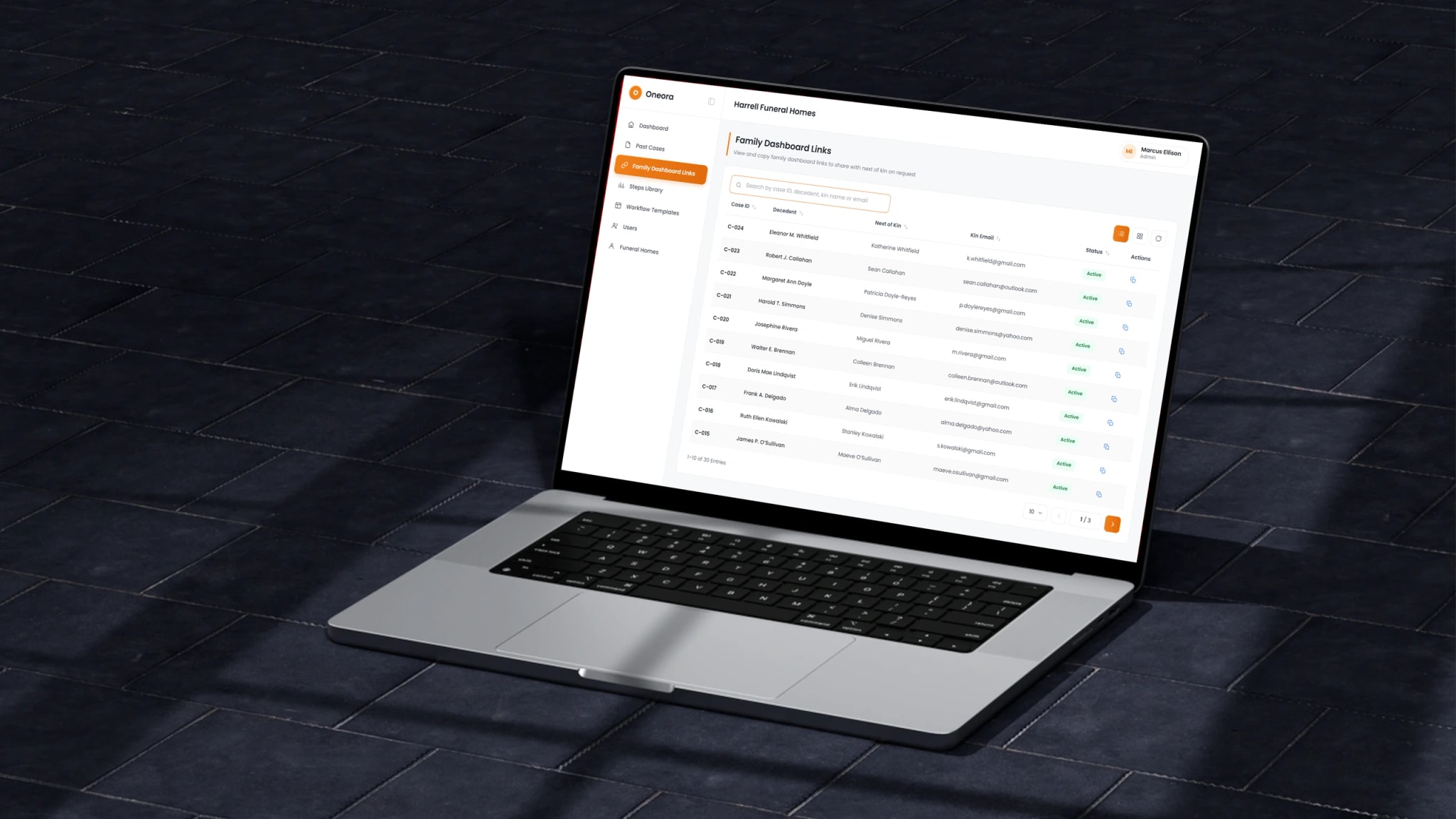
Each case brings together key information such as intake details, service scheduling, documents, and family contacts. Structured workflows help teams manage the steps involved in an arrangement while providing visibility into ownership and progress.
We also focused on reducing repetitive administrative work through automated routine steps and creating a more structured way for teams to coordinate with families.
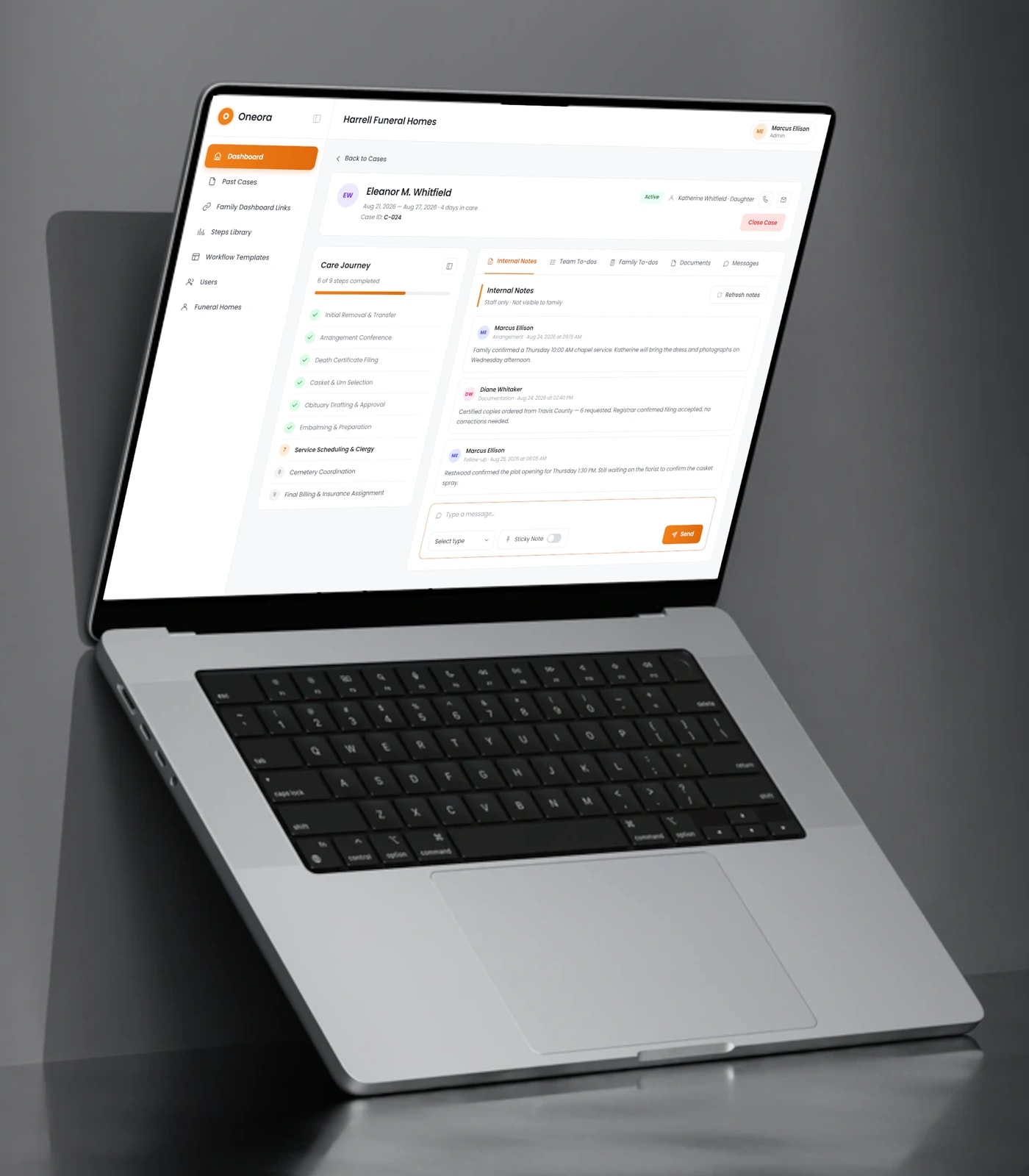
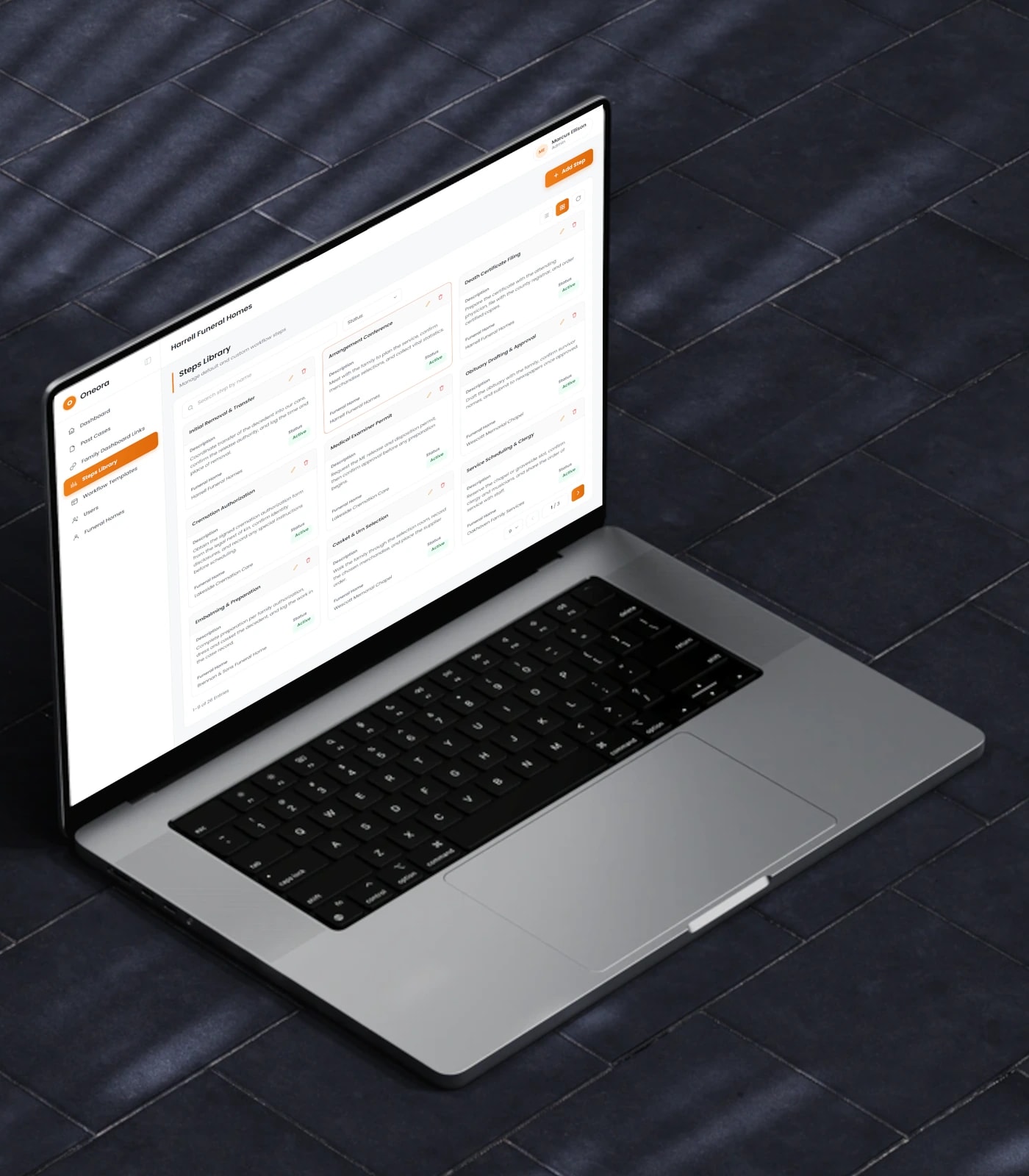
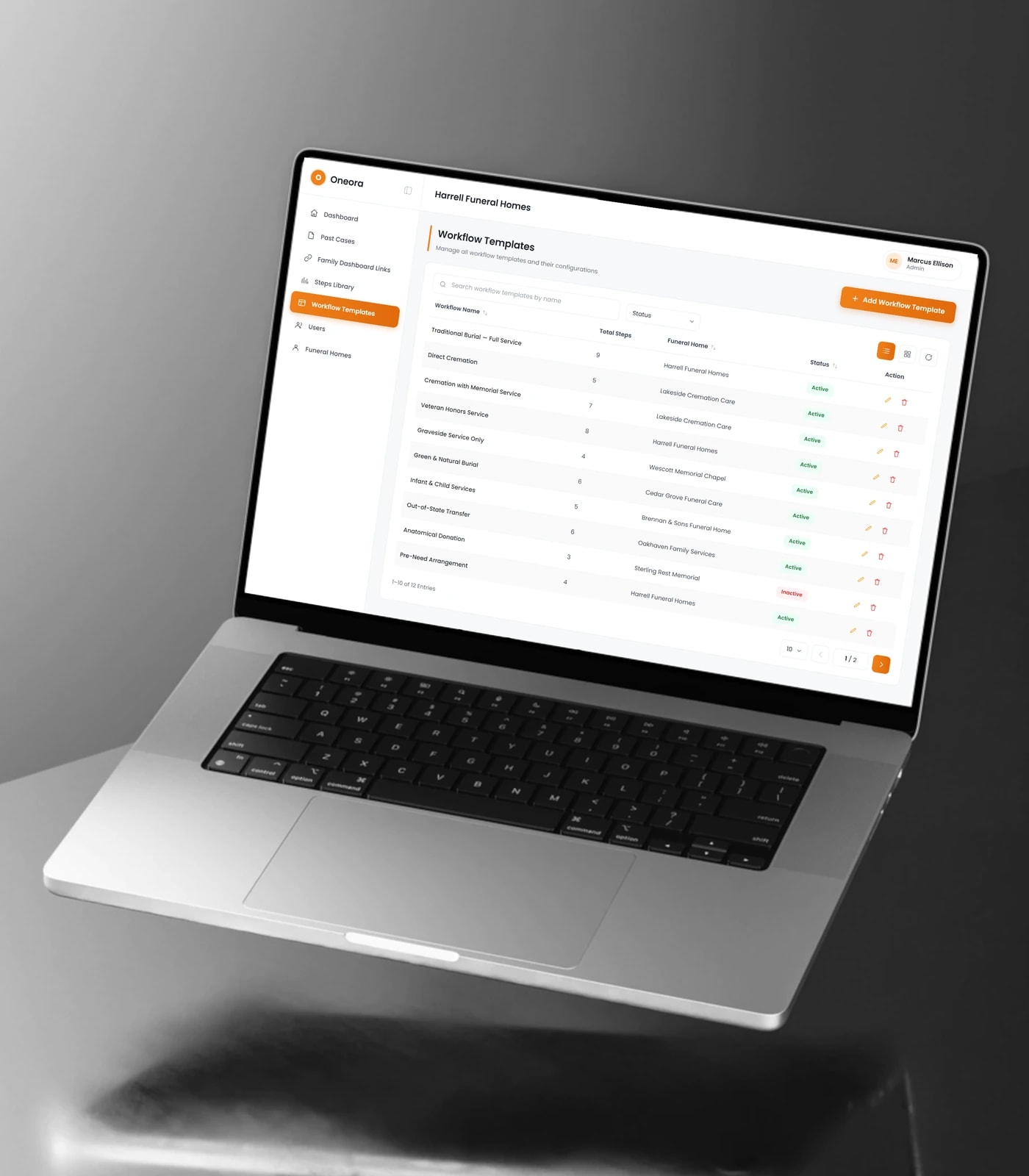
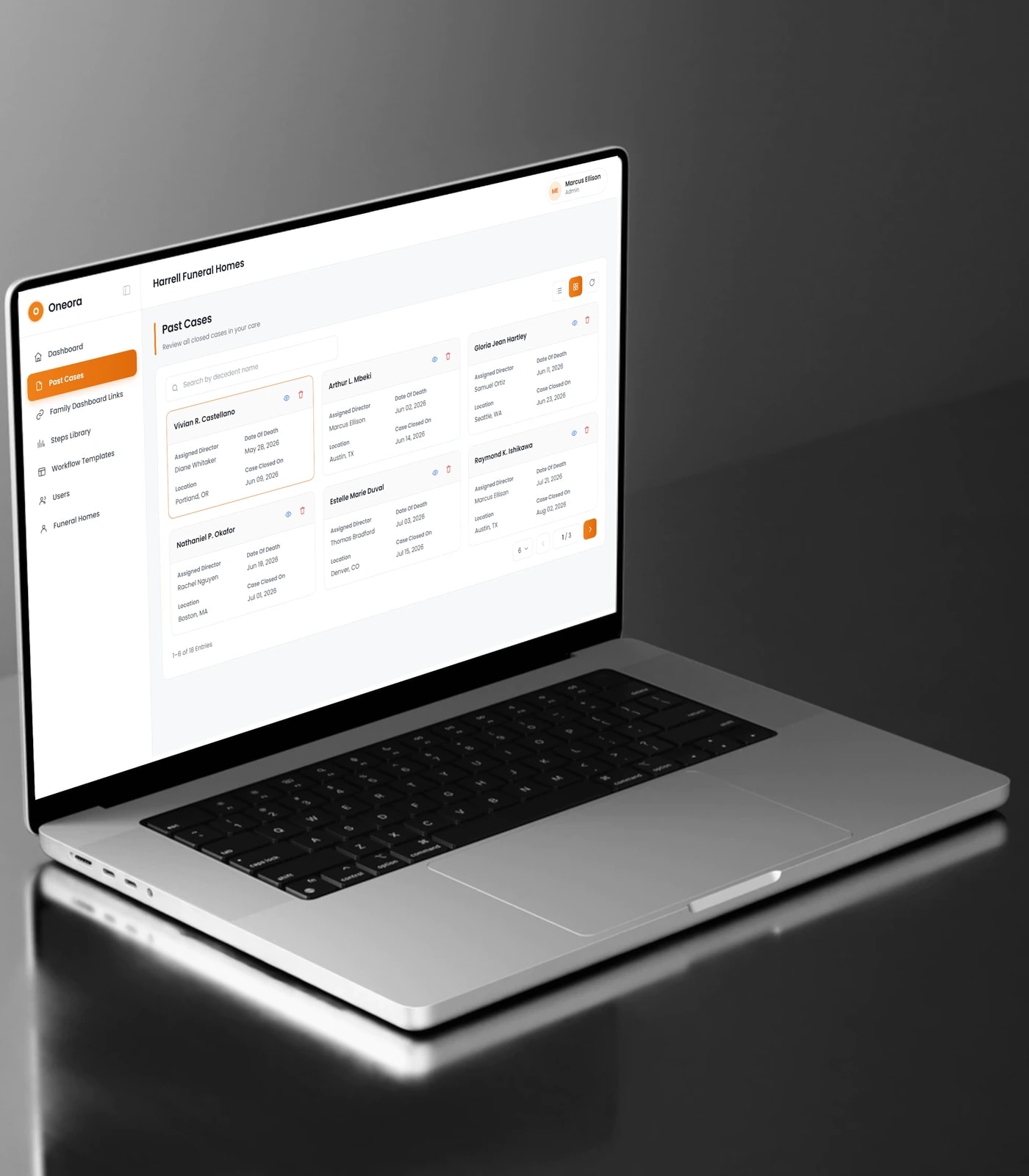
The platform gives funeral directors and their teams one place to manage every arrangement.
Each funeral arrangement is maintained as a complete case record covering intake, service scheduling, documents, and family contacts.
Predefined workflow steps help guide each arrangement from the initial intake through to the final service, with clear ownership and progress visibility.
Directors and staff can see where each case stands, making it easier to understand progress without relying on manual team updates.
The platform supports family communication and updates, helping staff keep families informed throughout the arrangement process.
Service-related documents are organized within the relevant case, making important information easier for staff to access when needed.
Repeatable parts of the arrangement process can be automated, helping reduce manual follow-up and the risk of missed steps.
Case information
Arrangement workflow
Case visibility
Documents
Family updates
Routine tasks
Team coordination
Whether you're building a case management platform, workflow automation system, industry-specific SaaS product, or operational management application, our team can help turn complex processes into a scalable digital product.
