AdTech SaaS Development: How AI Is Changing Digital Advertising
Key Takeaways
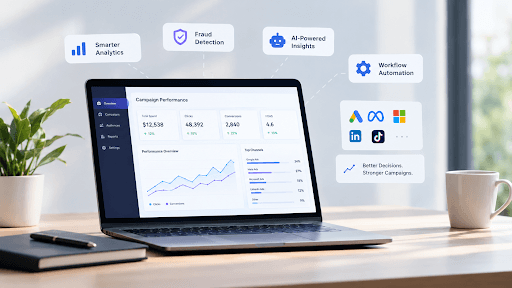
- 1AdTech SaaS Development: Helps businesses manage advertising data, monitor campaign performance, and improve reporting.
- 2AI-Powered Fraud Detection: Identifies unusual traffic patterns and potentially fraudulent clicks for further investigation.
- 3Essential Platform Features: Include data integrations, analytics dashboards, fraud monitoring, automated reporting, and user permissions.
- 4Building a Scalable Platform: Requires careful planning, secure data management, reliable integrations, and continuous testing.
- 5AdTech Trends for 2027: Focus on smarter automation, better campaign measurement, and greater transparency in AI-driven insights.
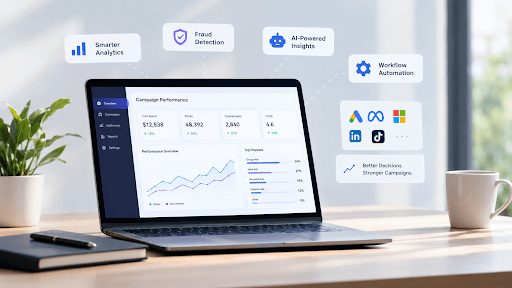
Digital advertising generates large amounts of data, but turning that information into useful decisions is not always easy. Businesses need to understand campaign performance, identify suspicious activity, connect different advertising platforms, and manage costs.
AdTech SaaS development helps businesses build software to address these challenges. With artificial intelligence (AI), these platforms can also help identify patterns, simplify reporting, and automate selected tasks.
The focus should be on developing advertising software that addresses business challenges, improves efficiency, and adapts to evolving user requirements.
What Is AdTech SaaS Development?
AdTech stands for advertising technology. It covers digital tools that help businesses manage advertising activities, monitor campaign results, evaluate performance, and improve their marketing efforts.
AdTech SaaS development involves building cloud-based advertising software that customers can access online. Depending on its purpose, a platform might offer campaign analytics, advertising management, fraud detection, audience insights, or automated reporting.
For example, An agencies running ads on different platforms may use a centralized dashboard to track campaign results, while software providers might develop specialized tools to identify suspicious clicks and deliver clearer advertising insights.
The features depend on the target users, business model, available data, and problems the product needs to solve.
Key Challenges in AdTech SaaS Development
Building advertising software involves more than creating a dashboard. The platform must handle data accurately, connect with other systems, and provide information users can trust.
1. Managing data from multiple sources
Advertising channels and analytics tools may use different formats and reporting methods. Integrating this information requires consistent data processing and reliable connections.
2. Detecting invalid traffic
Bots, repeated clicks, and other suspicious activity can distort advertising metrics. Platforms need ways to flag unusual patterns while avoiding unnecessary alerts about legitimate activity.
3. Measuring campaign performance
A customer may engage with a business through multiple marketing channels before completing a purchase or taking the desired action. Understanding how these interactions relate to a result can be difficult when data is incomplete or tracking is limited.
4. Protecting customer data
Advertising platforms may handle sensitive business and customer information. Access controls, secure storage, appropriate retention policies, and clear separation between customers should be considered from the beginning.
5. Keeping AI useful and reliable
AI-generated insights can be misleading when the underlying data is incomplete or the model is poorly evaluated. AI features need testing, monitoring, and appropriate human review.
Addressing these challenges early helps create a stronger foundation for future product development.
How AI Is Changing Digital Advertising
AI enables advertising platforms to analyze large datasets, recognize meaningful trends, and automate routine operational tasks. Its usefulness depends on the specific problem being addressed.
AI-powered advertising fraud detection
AI models can analyze signals such as unusual click patterns, repeated activity, and unexpected changes in traffic. These indicators can help teams spot potentially suspicious activity for closer examination.
However, unusual behavior alone does not confirm that fraudulent activity has occurred.
Smarter campaign analytics
AI-assisted analytics can help users identify significant changes in campaign performance and compare results across periods or channels.
For example, if clicks increase but conversions remain unchanged, the platform could flag the difference for investigation. The insight helps the user ask better questions rather than automatically assuming something is wrong.
Automated reporting
Marketing teams often spend time collecting metrics and preparing reports. AI can help summarize structured data, explain important changes, and generate initial report drafts.
These summaries should be grounded in actual platform data, with important figures traceable to their sources.
Workflow automation
AI and rule-based automation can support alerts, report generation, issue categorization, and recommended next steps. Actions that affect advertising budgets or live campaigns should have appropriate approval and control mechanisms.
Essential Features of an AI-Powered AdTech Platform
The features required for an AdTech platform depend on its goals, audience, and operational needs.
Feature | Purpose | Example |
Data integrations | Connect different systems | Import campaign performance data |
Analytics dashboards | Make metrics easier to understand | Compare spending and conversions |
Fraud monitoring | Flag suspicious patterns | Investigate unusual click activity |
Automated reporting | Reduce repetitive work | Generate campaign summaries |
Alerts and workflows | Help teams respond to changes | Notify users when metrics cross a threshold |
User permissions | Control access to information | Restrict data by role or customer |
A useful starting point is to build the core platform first, then add AI capabilities where they provide measurable value.
How to Build an AdTech SaaS Platform
Building an AdTech SaaS platform involves several stages, from defining the product requirements to testing and deployment. A structured process helps teams prioritize essential features, manage technical complexity, and make informed development decisions.
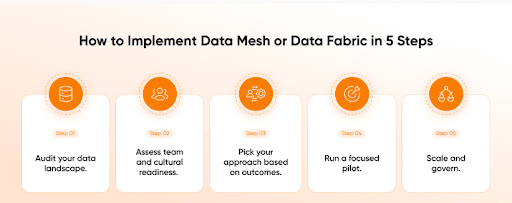
Step 1: Define the product and its users.
Identify whether the platform is designed for advertisers, agencies, publishers, or other businesses. Establish the main problem it will solve, its core features, and how success will be measured.
Step 2: Plan the data architecture.
Determine which advertising platforms and data sources need to be connected, how frequently data should be updated, and how it will be stored, processed, and protected.
Step 3: Develop the core features.
Start with essential capabilities such as user accounts, dashboards, data integrations, access permissions, and reporting. Prioritize features according to the needs of the target users.
Step 4: Introduce AI where appropriate.
Identify specific use cases, such as detecting unusual traffic patterns, flagging potentially fraudulent clicks, or summarizing reports. Test the results against reliable data before using them to support business decisions.
Step 5: Test, launch, and improve.
Evaluate data accuracy, security, performance, and usability before launch. After deployment, monitor the platform, gather user feedback, and address issues as the product evolves.
Choosing the Right Technology Stack
The technology stack should reflect the platform's requirements rather than follow a fixed combination of tools. The choice of frontend, backend, database, and data-processing technologies depends on the product's features, integration needs, expected data volumes, and scalability requirements.
For example, a platform focused on dashboards and reporting may have different infrastructure needs from one that processes large volumes of advertising events or performs real-time fraud detection. The development team's expertise and the technologies already used in the project should also influence these decisions.
The goal is to select technologies that support the platform's current needs while allowing room for future growth.
What Should AdTech Companies Prepare for in 2027?
As advertising technology evolves, AdTech companies need to focus on improvements that solve real business problems. For businesses developing AdTech SaaS platforms, three areas deserve attention:
Better campaign measurement: Connect advertising data from different channels to help businesses understand campaign performance and make informed decisions.
Smarter automation: Automate repetitive tasks such as reporting, traffic monitoring, and data analysis to reduce manual work.
Greater transparency: Make performance metrics easier to understand and help users investigate suspicious activity or review AI-generated recommendations.
By aligning development decisions with business goals, companies can create advertising platforms that offer practical benefits, use resources effectively, and respond to changing customer expectations.
How Vivansh Infotech Can Help With AdTech SaaS Development
Building or improving an AdTech product requires the right combination of software development, data integrations, analytics, and AI capabilities. The support needed will depend on whether you are launching a new platform or extending an existing product.
Vivansh Infotech provides custom software development and product engineering support for businesses developing and improving digital products.
Our support can include:
AdTech SaaS development: Building custom web applications, dashboards, and product features.
AI integration: Adding suitable AI capabilities for analytics, reporting, anomaly detection, or workflow automation.
Data and system integrations: Connecting relevant third-party services and organizing data for effective use.
Product improvements: Extending existing functionality and supporting ongoing development.
Dedicated engineering support: Providing additional development capacity for agreed project requirements.
Our ClickPatrol case study is relevant to businesses exploring advertising technology and fraud-related software. Review the case study to understand the work described there and assess its relevance to your product.
Whether you are planning a new AdTech SaaS product or improving an existing one, the process starts with understanding your goals, defining essential features, and establishing a practical development roadmap.
Conclusion
AdTech SaaS development helps businesses build software to manage advertising data, understand campaign performance, and respond to operational challenges. AI can strengthen these capabilities when it is supported by reliable data, appropriate testing, and clear business goals.
Whether you are developing a new advertising product or improving an existing platform, start with the problems your users need to solve. Build the essential capabilities first, then introduce AI where it can deliver practical value.
If you need additional engineering support for your AdTech product, Vivansh Infotech can discuss your requirements and help you evaluate the next steps.
Frequently Asked Questions
How much does AdTech SaaS development cost?
The cost depends on the platform's features, integrations, data requirements, security needs, and AI complexity. A focused first release will have a different scope from a full platform supporting multiple advertising channels. A requirements assessment helps establish a realistic estimate.
How long does it take to build an AdTech SaaS platform?
The timeline depends on the number of features, integration complexity, available data, and testing requirements. Defining the essential features for an initial release can help make planning more manageable.
Can AI be added to an existing advertising platform?
Yes. AI can be integrated into an existing product for specific uses, such as identifying unusual activity, summarizing reports, or supporting analytics. The existing architecture and quality of available data should be assessed first.
Can an external development team work with our in-house engineers?
Yes. An external team can take responsibility for agreed features, integrations, or AI development while collaborating with your existing engineers. Clear responsibilities, documentation, and communication practices help both teams work effectively.
What should businesses consider before building AdTech software?
Start by identifying the target users, the problem the platform will solve, the data sources it needs, and the essential features for launch. Security, scalability, integration requirements, and ongoing maintenance should also be part of the plan.