MVP Development: How to Validate Your Startup Idea Before You Build
Table of Contents
Key Takeaways
- 1An MVP tests one assumption: that people want this enough to use or pay for it.
- 2Validate demand with interviews and a landing page before writing code.
- 3Build the single core workflow end to end; cut everything else.
- 4Choose a mainstream, productive tech stack so you can change course quickly.
- 5Decide your success metrics before launch, then let the data decide what's next.
The most common reason startups fail is not bad engineering. It is building a product nobody needs badly enough to use or pay for. A minimum viable product exists to find that out early, while it is still cheap to change course.
An MVP is not a cheaper version of your full product. It is the smallest thing you can put in front of real users that tests your riskiest assumption. Here is how our MVP development team helps founders get there.
1. Define the problem, not the product
Write down, in one sentence, who has the problem and what it costs them today. "Small clinics lose 15% of appointments to no-shows" is testable. "An all-in-one platform for healthcare" is not. Everything in the MVP should trace back to that sentence.
2. Validate demand before writing code
You can learn a great deal before any development starts:
- Customer interviews: ask people how they solve the problem today and what that costs. Listen for workarounds and spending, not compliments.
- A landing page: describe the product, add a sign-up or pre-order button and send targeted traffic to it. The conversion rate is real evidence.
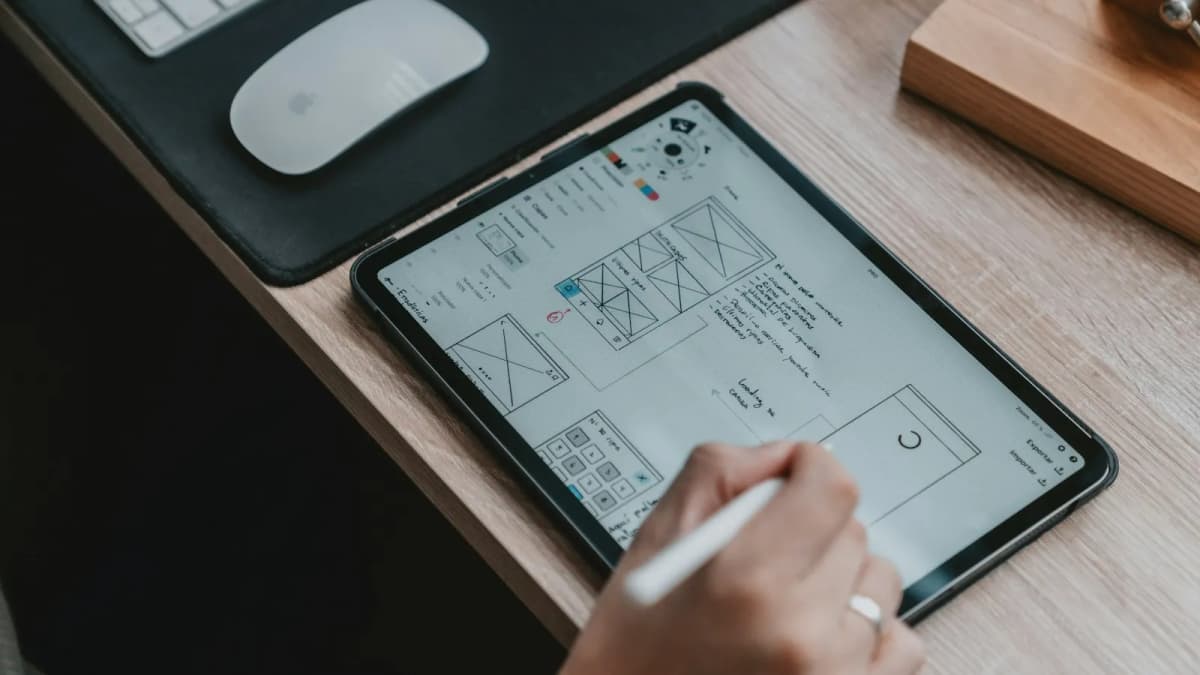
- A clickable prototype: a design prototype tested with five to ten target users reveals most usability problems in days.
3. Scope ruthlessly
List every feature you have imagined, then sort each into one of three groups:
| Group | Rule | Example |
|---|---|---|
| Must have | The core workflow fails without it | Booking an appointment |
| Should have | Valuable, but users can manage without it | Calendar sync |
| Later | Everything else | Analytics dashboards, multiple languages |
Only the first group goes into the MVP. Admin tasks can often be handled manually behind the scenes at first; automate them once you know the product works.
4. Choose a productive tech stack
For an MVP, speed of change matters more than theoretical scale. Choose mainstream, well-supported technology your team knows well: for example React or Next.js on the web, React Native or Flutter for mobile, and a proven back end such as Laravel, Node.js or Django with PostgreSQL. Managed hosting and services such as authentication and payments save weeks.
Build it properly, though. An MVP is small, not careless; if it works, you will build on it.
5. Build in short cycles
Work in one- or two-week iterations with a working build at the end of each. Founders should see and use the product continuously, not at the end. This is where most scope creep is caught early, while it is still cheap to say no.
6. Launch and measure
Decide your success metrics before launch, and make sure the product records them:
- Activation: how many sign-ups complete the core workflow?
- Retention: do they come back the next week and the week after?
- Willingness to pay: do they convert to a paid plan or pre-order?
Pair the numbers with conversations. Metrics tell you what users do; interviews tell you why.
7. Decide what comes next
With real usage data you can make the decision an MVP exists for: invest in what works, change direction based on what you learned, or stop before spending more. All three are good outcomes compared with building a full product on an untested assumption.
Have an idea you want to test? Tell us about it and we will help you scope an MVP.
Frequently Asked Questions
How long does it take to build an MVP?
A focused web or mobile MVP typically takes eight to sixteen weeks. If it is taking much longer, the scope is usually too large for an MVP.
How much does an MVP cost?
It depends on scope, platforms and integrations. Keeping the MVP to one core workflow on one platform is the most effective way to control cost.
Should the MVP be web or mobile?
Start where your users are and where you can iterate fastest. A responsive web app is often quicker to ship and update; choose mobile first when the product depends on phone features such as location, camera or notifications.
What happens after the MVP?
You measure, talk to users and decide: double down on what works, change direction, or stop. Successful MVPs grow into full products through short, data-driven iterations.