How AI and Automation Are Transforming Property Management
Key Takeaways
- 1Property management involves several connected workflows that can become difficult to manage manually.
- 2Automation helps streamline property listings, tenant enquiries, viewing schedules, applications, and payment processes.
- 3AI-powered assistants can help prospective tenants get information and arrange property viewings.
- 4AI-assisted application workflows can help organise and prioritise information, while important decisions should remain subject to appropriate human review.
- 5Integrated property management software gives landlords and property managers better visibility into day-to-day activities.
1. Why Is Property Management Becoming More Technology-Driven?
Managing rental properties involves much more than finding tenants and collecting rent. Property owners and letting businesses must coordinate property advertisements, tenant enquiries, viewing appointments, applications, referencing, agreements, payments, maintenance, and compliance requirements.
When these activities are handled through separate systems, emails, spreadsheets, and phone calls, information can become scattered. Staff may spend considerable time responding to repeated enquiries, arranging appointments, checking application details, and updating records.
This is where property management technology becomes valuable.
Digital platforms bring important rental activities into a connected system. AI and automation take this further by helping businesses handle repetitive tasks, organise information, and make everyday workflows more efficient.
2. Common Challenges in Traditional Property Management
Before understanding the role of technology, it is important to look at some common challenges faced by landlords and property management businesses.
Manual property advertising
Managing property details and publishing listings across multiple channels can involve repeated data entry and updates.
Time-consuming tenant communication
Responding to enquiries, answering property-related questions, and coordinating viewing appointments can require considerable staff time.
Complex application management
Landlords need to collect and review information from prospective tenants. Handling multiple applications manually can make the process difficult to organise.
Viewing coordination
Finding suitable viewing times involves communication between prospective tenants, landlords, and property managers. Delays can affect the overall rental experience.
Scattered financial records
Rent payments, deposits, reminders, and tenancy records need to be monitored throughout the rental period.
Compliance administration
Property managers must keep track of inspections, certificates, tenancy documents, and other requirements that may vary by location.
A well-designed digital platform can bring these activities together and reduce unnecessary manual coordination.
3. How AI and Automation Improve Property Management
AI and automation serve different but complementary purposes. Automation handles predefined tasks and workflows, while AI can interpret information, understand requests, and assist with more flexible interactions.
Here are some practical applications.
1. Automated Property Listings
Property management platforms can allow landlords to create and manage property listings through a central dashboard. Integrations with property portals can help publish and update listings without repeatedly entering the same information.
This makes property advertising easier to manage, particularly for businesses handling multiple properties.
2. AI-Powered Tenant Enquiries
A conversational AI assistant can respond to common property-related questions and guide prospective tenants through the next steps.
For example, someone interested in a rental property may ask about availability or request a viewing. An AI assistant can collect the necessary details and help initiate the booking process without requiring staff to respond to every enquiry manually.
3. Automated Viewing Management
Viewing arrangements often involve repeated communication to find a suitable time.
An online booking system can allow prospective tenants to request available viewing slots, receive confirmations, and get relevant updates.
AI assistants can make this process more conversational by understanding requests and guiding users through booking steps.
4. AI-Assisted Application Review
Property managers may receive several viewing requests and tenant applications for the same property.
AI can help organise submitted information, identify missing details, and prioritise requests according to clearly defined criteria. This can make the review process more manageable.
However, tenant selection involves important housing decisions. AI-generated rankings should not automatically determine who gets a property. Businesses should use transparent criteria, appropriate human oversight, and safeguards against unfair or discriminatory outcomes.
5. Automated Rent and Payment Workflows
Property management software can track rent schedules, record payments, send reminders, and provide landlords with an overview of payment activity.
Connecting payment services with the platform can also help reduce manual record updates and make financial information easier to access.
6. Compliance and Document Management
Rental businesses handle several documents, including safety certificates, inspection reports, tenancy agreements, and property records.
A central platform can organise these documents, track important dates, and send reminders when actions or renewals are approaching.
Automation can help property managers maintain more consistent records and avoid relying entirely on manual reminders.
4. Essential Features of Modern Property Management Software
A property management platform should support the complete rental workflow rather than focusing on only one activity.
Some important features include:
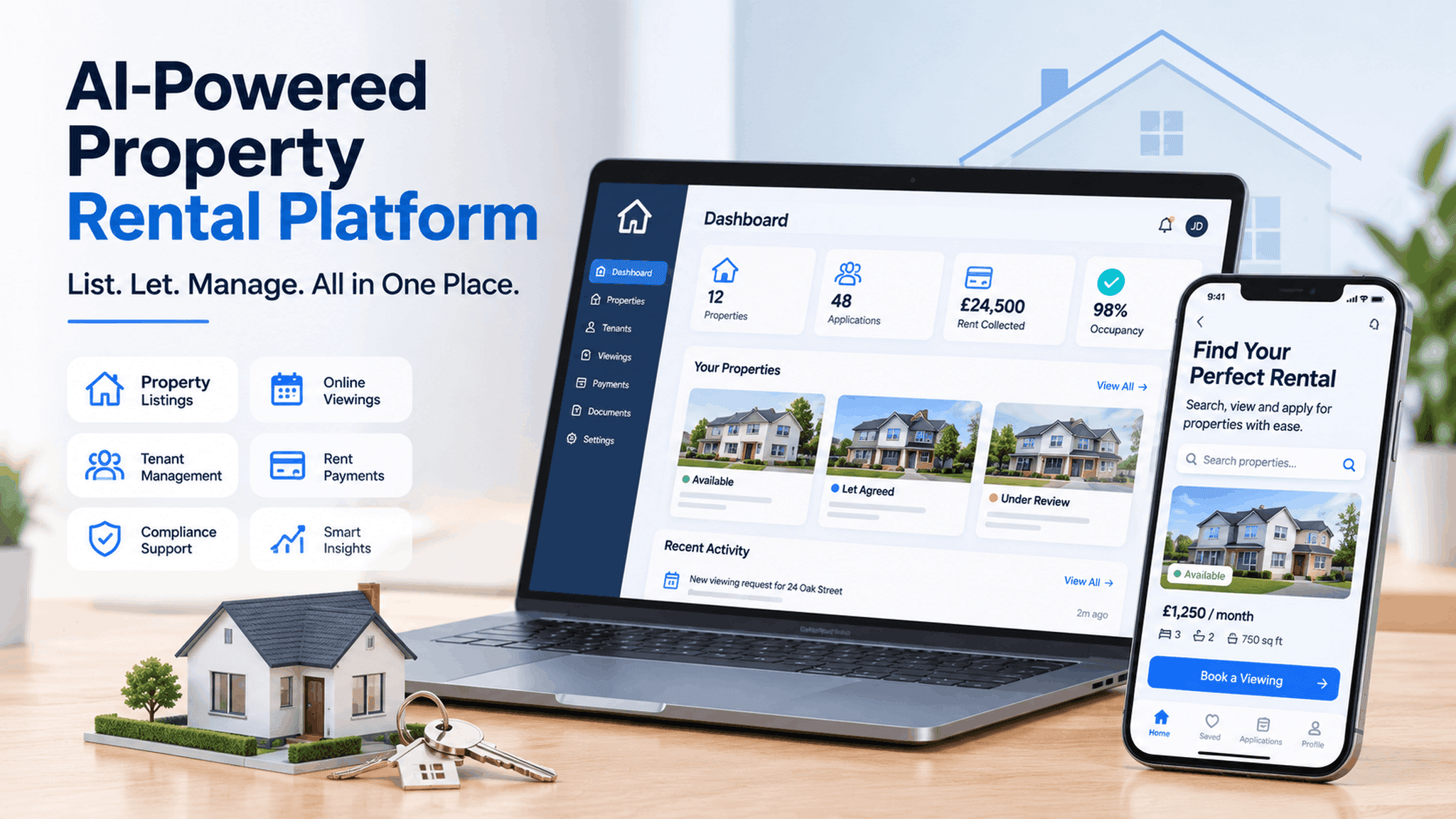
- Property listing management: Create, update, and manage rental property information.
- Tenant enquiry management: Organise prospective tenant enquiries and communication.
- Viewing scheduling: Allow users to request and manage property viewings online.
- Online applications: Collect and manage tenant application details.
- Tenant referencing integration: Connect with relevant services for background, credit, and affordability checks.
- Landlord dashboard: Provide visibility into properties, applications, payments, and tenancy activity.
- Rent and deposit management: Track payment schedules, transactions, and reminders.
- Document management: Store tenancy agreements, inspection reports, and compliance records.
- AI assistant: Help users find information and complete supported actions through conversational interactions.
- Reporting and analytics: Give property managers an overview of operational activity and performance.
The exact feature set depends on the business model, property portfolio, user requirements, and regional regulations.
5. Benefits for Landlords, Tenants, and Property Managers
A connected property management platform can improve the experience for everyone involved.
For landlords
Landlords can manage property information, review applications, monitor payments, and access tenancy records through one portal. This provides greater visibility without depending entirely on manual updates.
For tenants
Prospective tenants can search for properties, submit enquiries, request viewings, and complete application steps online. Clearer communication and accessible information can make the rental process easier to navigate.
For property managers
Automation can reduce repetitive administrative work, organise tenant communication, and make it easier to monitor multiple properties and ongoing activities.
For letting businesses
Integrated systems can connect different service areas, improve operational visibility, and provide a more consistent experience across the rental lifecycle.
6. What Should Businesses Consider Before Building a Property Management Platform?
Developing property management software requires an understanding of both real estate operations and the technology behind them.
Before starting development, businesses should consider:
Business model: Determine whether the platform will serve individual landlords, letting agencies, property managers, or multiple user groups.
User roles: Define separate permissions and workflows for landlords, tenants, administrators, and property managers.
Workflow integration: Identify how listings, applications, viewing schedules, payments, and documents should connect.
Third-party services: Consider integrations with property portals, payment gateways, tenant referencing providers, and compliance services.
AI implementation: Identify where AI can genuinely improve workflows and where predefined automation is more suitable.
Data security: Protect personal, financial, and tenancy information through suitable access controls and security practices.
Scalability: Design the platform to support additional properties, users, integrations, and features as the business grows.
The goal should be to create software that supports real property management processes rather than simply adding digital versions of existing paperwork.
7. The Future of Property Management Software
Property management software is moving towards more connected and intelligent workflows.
AI assistants can make it easier for users to interact with rental platforms. Automation can connect property enquiries, viewing schedules, applications, payments, and document management. Data analytics can also help businesses understand operational activity and identify areas that need attention.
However, successful platforms will need more than AI features. They will require reliable integrations, clear user experiences, secure information management, and workflows that reflect how property businesses actually operate.
The most useful solutions will combine automation and AI with human oversight, giving property professionals better tools without removing the need for informed decisions.
Conclusion
Technology is changing how rental properties are advertised, managed, and maintained. From automated viewing arrangements and tenant communication to payment tracking and compliance management, digital platforms can reduce fragmented processes and improve visibility across the rental lifecycle.
For real estate businesses, the opportunity is to build connected systems that address their specific operational challenges.
At Vivansh Infotech, we develop custom software solutions, AI-powered applications, and SaaS platforms for businesses looking to simplify complex workflows. Whether you are planning a property management system, a rental platform, a landlord portal, or AI-powered property workflows, our team can help turn your requirements into a practical digital solution.
Frequently Asked Questions
What is property management software?
Property management software is a digital platform that helps landlords, letting agents, and property managers handle activities such as property listings, tenant applications, rent collection, maintenance, documents, and tenancy records.
How is AI used in property management?
AI can support conversational tenant enquiries, viewing assistance, document processing, information organisation, and selected application review workflows. Its use should be guided by appropriate oversight and safeguards.
Can property management software automate tenant viewing bookings?
Yes. Online booking systems can show available viewing slots, collect requests, send confirmations, and provide updates. Conversational AI can also guide prospective tenants through the booking process.
What features should a rental property management platform include?
Common features include property listings, tenant enquiries, viewing management, online applications, tenant referencing integrations, payment tracking, document management, landlord dashboards, and reporting.
Can custom software integrate with existing property management services?
Yes. Custom platforms can integrate with suitable third-party services, such as property advertising portals, payment gateways, referencing providers, and document services, depending on their available APIs and integration requirements.