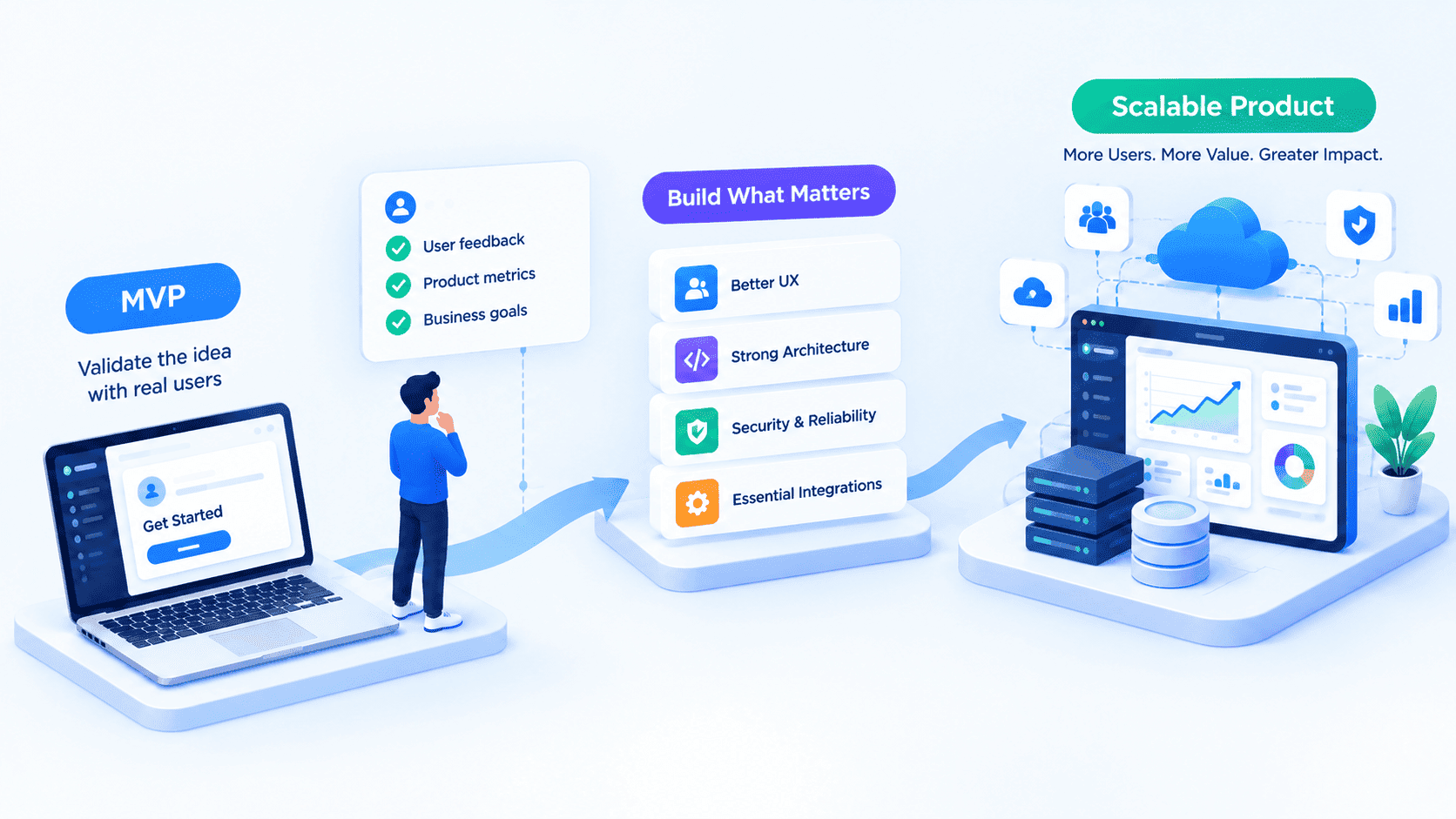
The Future of Mobile Apps: From Traditional Interfaces to AI-Powered Experiences
Key Takeaways
- 1Mobile apps are evolving beyond traditional tap-based interactions
- 2AI personalization can make applications more relevant to individual users
- 3AI agents can help users complete tasks, not just answer questions
- 4On-device AI offers opportunities for faster and more private processing
- 5Security and scalability are essential for modern mobile applications
- 6Businesses should invest in AI features that solve real user problems
Think about how you use mobile apps every day. You open an application, navigate through menus, search for information, and follow multiple steps to complete a task.
But what if an app could understand what you need and help you get it done with fewer steps?
This is where mobile app development is heading.
Artificial intelligence (AI) is changing how applications interact with users. Instead of simply responding to taps and commands, modern apps can understand requests, personalize recommendations, and automate everyday tasks.
For businesses, this creates an opportunity to build more useful digital products, improve customer experiences, and make applications more efficient.
Let's explore the key changes shaping the future of mobile apps.
1. From Traditional Interfaces to Intelligent Experiences
Traditional mobile applications follow predefined user journeys. Users navigate menus, fill out forms, and select options to complete specific actions.
While this approach remains useful, expectations are changing. Users increasingly want faster and simpler ways to interact with applications.
AI-powered mobile apps introduce more flexible interactions through natural language processing, intelligent search, and conversational interfaces.
For example:
An e-commerce app can suggest products based on customer preferences.
E-commerce AppAn education app can recommend lessons based on learning progress.
Education AppA travel app can help users plan trips through conversational requests.
Travel CRM App
The goal is not to eliminate traditional interfaces but to make them more intelligent and easier to use.
Traditional Mobile Apps vs AI-Powered Mobile Apps
Traditional Mobile Apps | AI-Powered Mobile Apps |
Follow predefined user journeys | Adapt interactions based on user needs |
Depend on manual searches | Offer intelligent and contextual search |
Provide standard recommendations | Deliver personalized suggestions |
Require users to navigate multiple screens | Support conversational interactions |
Perform tasks based on fixed rules | Can automate tasks using AI agents |
Offer mostly static experiences | Can provide adaptive experiences |
This shift allows businesses to create applications that do more than display information. They can respond to user needs and make everyday interactions simpler.
2. AI-Powered Personalization Will Improve User Experiences
Users expect applications to understand their preferences rather than provide the same experience to everyone.
AI-powered personalization helps businesses deliver more relevant content and recommendations by analyzing permitted user interactions and behavioral patterns.
Some practical applications include:
Personalized product and content recommendations.
Intelligent search results based on user intent.
Customized dashboards and notifications.
Suggestions based on previous activities.
For instance, a shopping application can recommend relevant products based on a customer's browsing history and preferences.
Similarly, a learning platform can suggest additional resources based on a learner's progress.
These capabilities can make applications more engaging and help businesses build stronger customer relationships.
3. AI Assistants and Agents Will Help Users Complete Tasks
One of the most significant developments in AI app development is the move from traditional chatbots towards AI agents.
A chatbot generally answers questions or provides information. An AI agent can go further by interacting with connected tools and performing approved actions within an application.
Imagine using a business management app and asking:
"Show me this week's pending tasks and create reminders for the overdue ones."
Instead of navigating through multiple screens, an AI assistant could retrieve the information and create reminders with the appropriate permissions.
Other possible applications include:
Booking appointments through conversational requests.
Retrieving and summarizing business information.
Creating tasks and updating records.
Helping customers track orders and service requests.
This allows mobile applications to become more than information platforms. They can actively help users complete everyday tasks.
However, these features need secure integrations, clear permissions and human approval for sensitive actions.
How AI Is Transforming Mobile Apps Across Industries
Industry | AI-Powered Mobile App Capabilities | Business Benefits |
E-commerce | Product recommendations and visual search | Better product discovery |
Healthcare | Appointment assistance and health information support | More convenient patient experiences |
Education | Personalized learning and AI tutors | Improved learning support |
Travel | Trip recommendations and conversational booking assistance | Simplified travel planning |
Logistics | Route insights and delivery predictions | Improved operational efficiency |
These examples show how AI-powered mobile applications can address different business requirements across industries.
4. On-Device AI Will Support Faster and More Private Experiences
AI processing does not always need to happen in the cloud.
On-device AI allows certain tasks to run directly on a smartphone using its processing capabilities.
This creates several opportunities:
Faster responses: Certain operations can run locally without waiting for a server response.
Offline capabilities: Some AI features can work without a continuous internet connection, depending on the device and model.
Improved privacy: Processing suitable information locally can reduce the need to send it to external servers.
Reduced cloud dependency: Businesses may lower some cloud processing requirements depending on application usage.
A hybrid approach can also combine on-device AI for simpler tasks with cloud-based AI for more complex operations.
The right choice depends on performance, device compatibility, data sensitivity and application requirements.
5. Voice and Conversational Interfaces Will Simplify App Interactions
Mobile applications have traditionally depended on touch-based navigation. Users tap buttons, type queries, and move between screens.
Voice and conversational interfaces offer another way to interact.
For example, users could ask a shopping application to find products within a particular budget or ask a travel app to suggest destinations based on their available time.
AI helps applications understand these requests and provide relevant responses.
Voice interaction will not replace every screen or button. However, it can make specific tasks more convenient, especially when users need hands-free access or want to complete actions quickly.
6. Security and Scalability Will Remain Essential
As applications become more intelligent, they may process increasing amounts of personal and business information.
This makes security an essential part of mobile app development.
Businesses should prioritize:
Secure authentication and access controls.
Encryption of sensitive information.
User consent and responsible data handling.
Permission-based access to AI features.
Secure API integrations.
Regular testing and monitoring.
Scalability is equally important. Applications should be designed to support growing users, increasing data volumes, and additional integrations without compromising performance.
Security and scalability should be considered from the beginning rather than added after development.
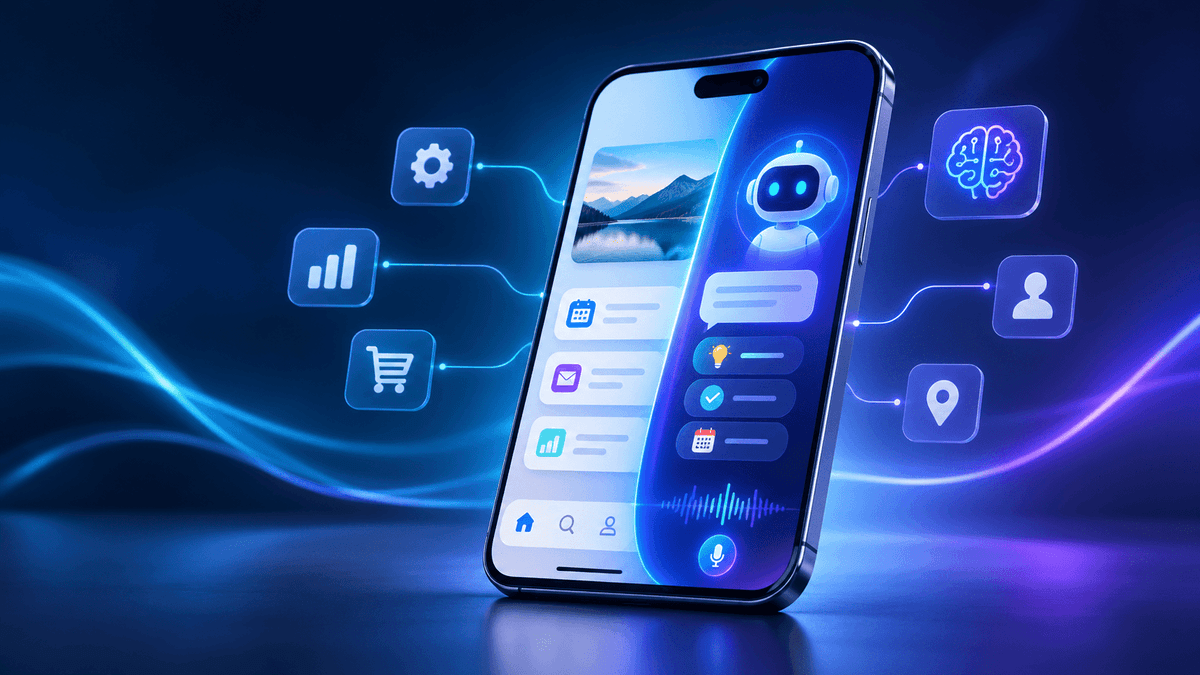
What Should Businesses Consider Before Building an AI-Powered Mobile App?
Adding AI simply because it is trending does not guarantee a successful application.
Businesses should first identify the problems they want to solve.
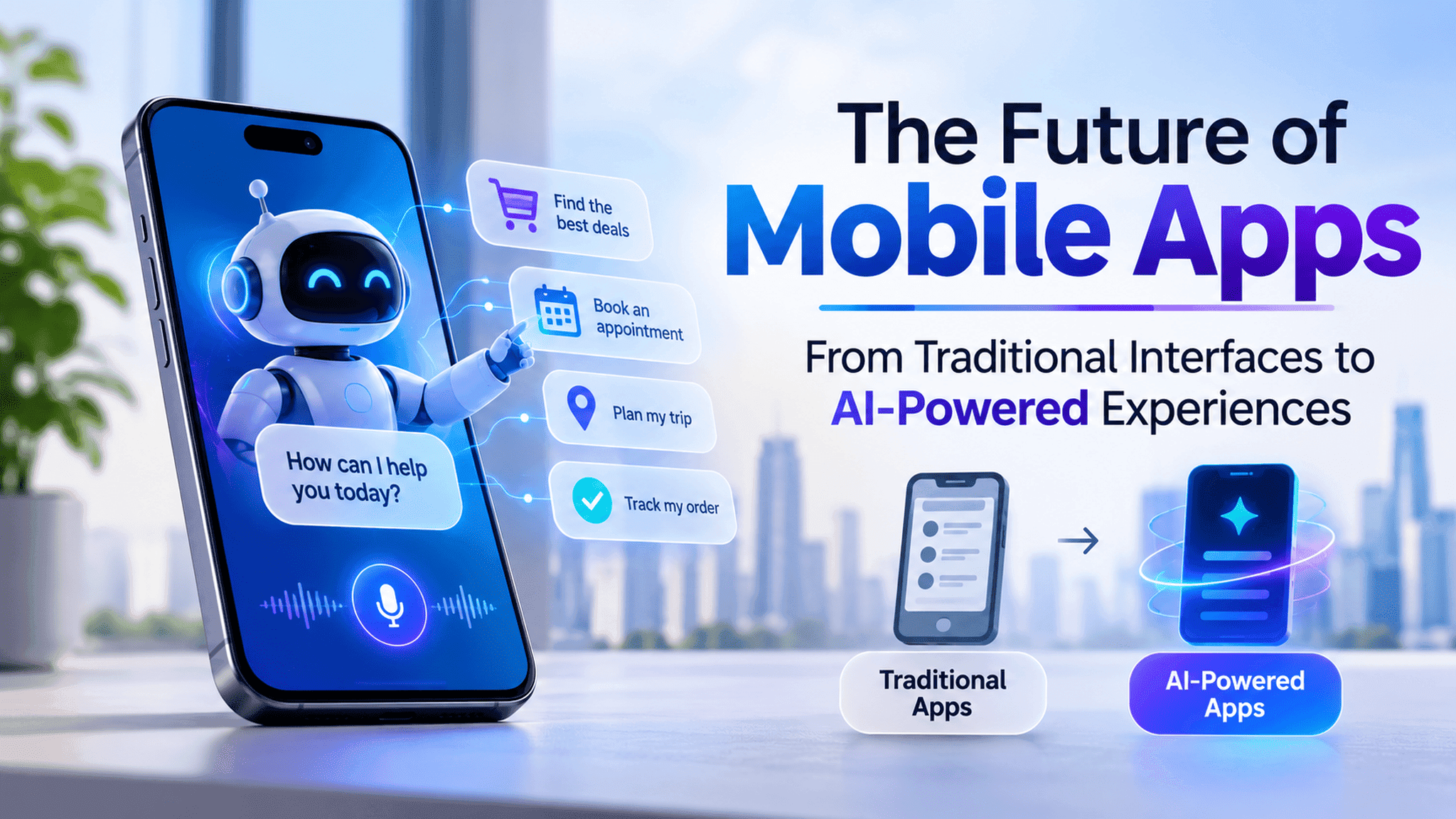
Before starting development, consider these priorities:
1. Understand user needs: Identify where customers experience difficulties with existing products or services.
2. Choose useful AI features: Start with capabilities such as intelligent search, recommendations, or workflow automation.
3. Select suitable technologies: Evaluate native and cross-platform development, AI models and backend architecture.
4. Plan for future growth: Build an architecture that supports new features, integrations and increasing workloads.
5. Measure results: Track user engagement, task completion, response quality and overall application performance.
Starting with a few valuable features and expanding based on user feedback is often more practical than introducing too many AI capabilities at once.
Conclusion: Building the Next Generation of Mobile Applications
The future of mobile apps is not just about adding more features or improving visual design. It is about creating applications that understand user needs, simplify interactions, and deliver meaningful value.
AI-powered personalization, intelligent assistants, AI agents, and on-device processing are creating new possibilities for digital products.
For businesses, the opportunity lies in choosing the right technologies to solve real problems rather than adopting AI simply because it is popular.
At Vivansh Infotech, we help businesses design and develop custom mobile and web applications, integrating AI capabilities where they deliver practical value.
Whether you are planning a new mobile product or looking to improve an existing application, we can help turn your idea into a scalable digital solution.
Planning your next mobile app? Let's discuss your project.
Frequently Asked Questions
What is the future of mobile app development?
Mobile app development is moving towards intelligent, personalized, and connected experiences powered by AI, automation, conversational interfaces, and smarter integrations.
How is AI changing mobile app development?
AI enables applications to offer personalized recommendations, intelligent search, automated workflows, conversational assistants, and predictive features.
What are AI-powered mobile applications?
These are applications that use technologies such as machine learning, natural language processing, and generative AI to improve functionality and user experiences.
Can AI be integrated into an existing mobile app?
Yes. AI capabilities can be integrated into existing applications through APIs, AI models and backend services, depending on the app's architecture and requirements.
How much does it cost to develop an AI-powered mobile app?
The cost depends on application complexity, platform selection, design, integrations, AI features, security, and infrastructure requirements.