How Much Does Custom Software Development Cost? A Business Guide
Key Takeaways
- 1Custom software development costs depend on project scope, complexity, features, integrations, and technology requirements
- 2UI/UX design, backend development, testing, and deployment all contribute to the overall budget
- 3MVP development can help businesses validate an idea before investing in a larger product
- 4Third-party integrations, security requirements, and scalability can affect development costs
- 5Fixed-cost, hourly, and dedicated development models offer different levels of flexibility and budget control
- 6Ongoing maintenance, hosting, and future improvements should be included in the software budget from the beginning
Businesses considering custom software development often start with one important question: How much will it cost?
The answer depends on what needs to be built, how the software will be used, and the technical requirements involved. A simple business application may require a relatively small development effort, while a complex SaaS platform with multiple user roles, integrations, and advanced workflows will need considerably more planning and development.
The challenge is that software development costs are not determined by the number of screens or features alone. Architecture, user experience, security, integrations, testing, and future scalability also influence the investment.
Understanding these factors before starting a project helps businesses establish a realistic budget, prioritize essential features, and avoid unnecessary development expenses.
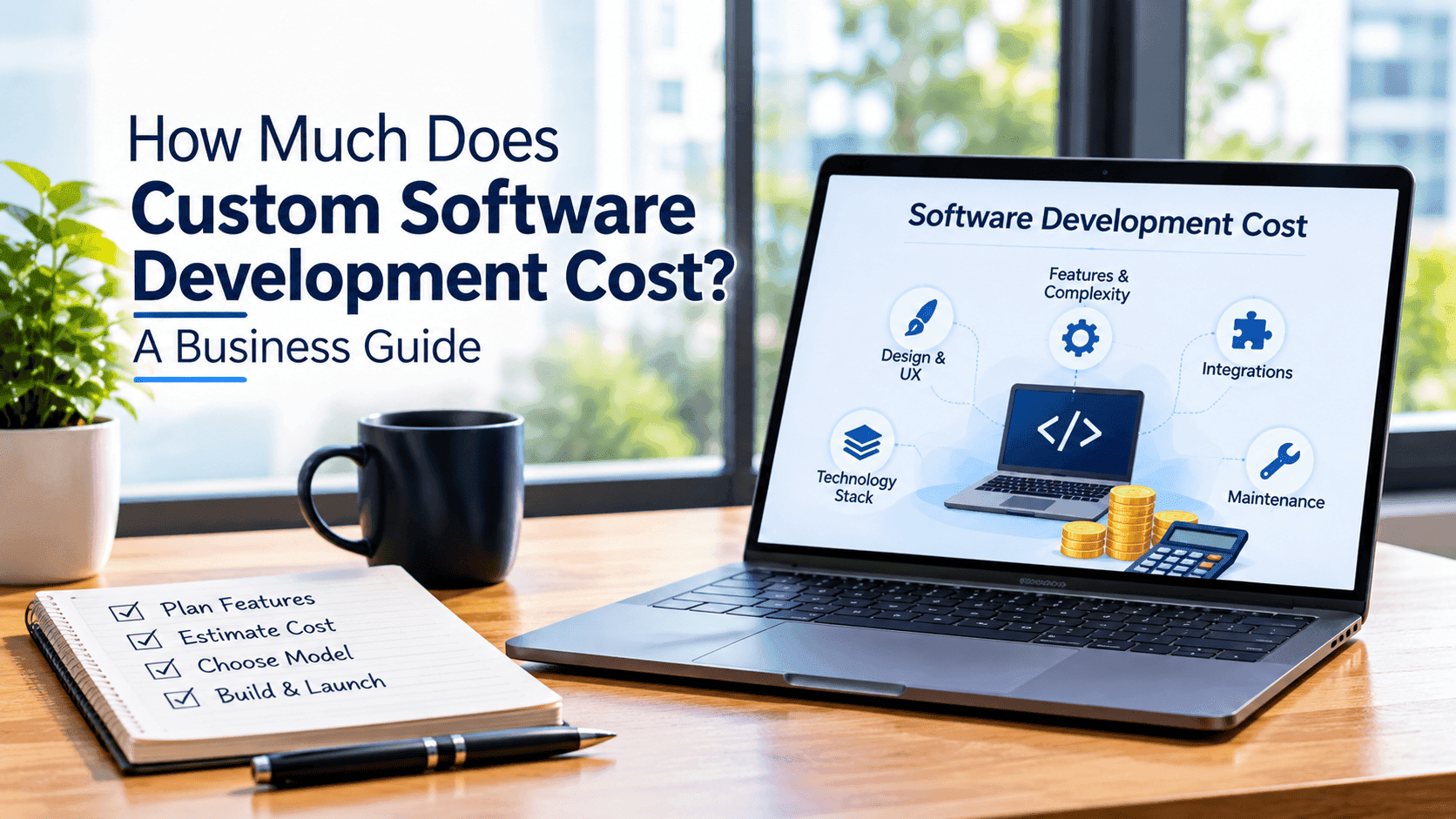
What Determines the Cost of Custom Software Development?
There is no single price that applies to every software project. Two applications may appear similar from the outside but require very different development efforts behind the scenes.
The following factors have a direct influence on project cost.
Cost factor | What influences the cost |
Project scope | Number of features, workflows, and user roles |
UI/UX design | Interface complexity, user journeys, and design requirements |
Technology stack | Frameworks, programming languages, and infrastructure |
Backend development | Business logic, databases, APIs, and processing requirements |
Integrations | Payment gateways, CRMs, third-party services, and external APIs |
Security | Authentication, permissions, data protection, and compliance requirements |
Testing | Functional testing, performance testing, and quality assurance |
Scalability | Architecture and infrastructure needed to support future growth |
A project with a clearly defined scope and straightforward workflows is generally easier to estimate than one with changing requirements or several interconnected systems.
7 Factors That Influence Software Development Costs
1. Project Scope and Feature Requirements
The features included in an application are among the biggest factors affecting development effort.
For example, a basic appointment booking application may need user registration, calendar availability, booking management, and notifications. A more advanced version may also require online payments, multiple service providers, reporting dashboards, automated reminders, and third-party integrations.
Each additional feature introduces design, development, testing, and maintenance requirements.
Before estimating the cost, separate features into three groups:
Essential features: Required for the application to perform its primary purpose.
Important improvements: Features that improve usability or business operations but are not essential for the first release.
Future enhancements: Capabilities that can be introduced after the product has been validated.
Prioritizing features helps businesses avoid spending their initial budget on functionality that users may not need.
2. UI/UX Design Requirements
The user interface affects how people interact with software. Design requirements can range from simple forms and dashboards to detailed workflows involving multiple user types.
Development teams typically consider:
User research and requirement understanding.
User journeys and wireframes.
Interface design and reusable components.
Responsive layouts for different devices.
Interactive prototypes and design validation.
An application with multiple dashboards, permissions, and complex workflows requires more design effort than a straightforward internal tool.
Planning the user experience early also reduces the risk of expensive interface changes during development.
3. Frontend and Backend Development
Custom software usually consists of several technical components that work together.
Frontend development covers the screens and interactions users see, including dashboards, forms, navigation, and responsive layouts.
Backend development handles the underlying application logic, database operations, authentication, APIs, and business workflows.
The amount of work depends on the application's requirements.
For example, an internal task management application may have relatively straightforward workflows. A SaaS platform with subscription management, multiple organizations, role-based permissions, reporting, and automated processes requires a more involved backend architecture.
The technology stack should be selected according to the product's requirements, available expertise, integration needs, and long-term maintenance plans.
4. Third-Party Integrations
Many business applications depend on external services to perform specific functions.
Common examples include:
Integration | Typical purpose |
|---|---|
Payment gateways | Process online transactions and subscriptions |
CRM systems | Manage customer information and sales activities |
Email services | Send notifications and transactional messages |
Accounting software | Synchronize invoices and financial records |
Cloud storage | Store and retrieve documents and files |
Authentication services | Support secure login and user access |
External APIs | Exchange information with other applications |
Integration costs depend on API availability, documentation quality, authentication requirements, data mapping, and the complexity of the workflows involved.
Connecting two applications through a well-documented API may be relatively straightforward. Synchronizing data across multiple legacy systems can require considerably more effort.
5. Security and Scalability Requirements
Security and scalability should be considered during planning rather than treated as last-minute additions.
Depending on the application, requirements may include:
Secure user authentication and authorization.
Role-based access control.
Data encryption and secure communication.
Audit logs and activity tracking.
Backup and recovery procedures.
Performance monitoring.
Infrastructure capable of supporting increasing usage.
Applications handling sensitive customer information, financial transactions, or regulated data may require additional security reviews and compliance-related work.
The right architecture should address current requirements without making future improvements unnecessarily difficult.
6. Testing and Quality Assurance
Software that works during development may still have issues when used in real business conditions.
Testing helps identify problems before they affect customers or internal teams.
Typical testing activities include:
Functional testing to verify individual features.
Integration testing to check communication between systems.
Responsive testing across devices and browsers.
Performance testing under different usage conditions.
Security testing based on project requirements.
User acceptance testing before release.
Testing effort depends on application complexity, the number of integrations, expected usage, and the consequences of software failure.
Reducing testing to save money can lead to additional development work and production issues later.
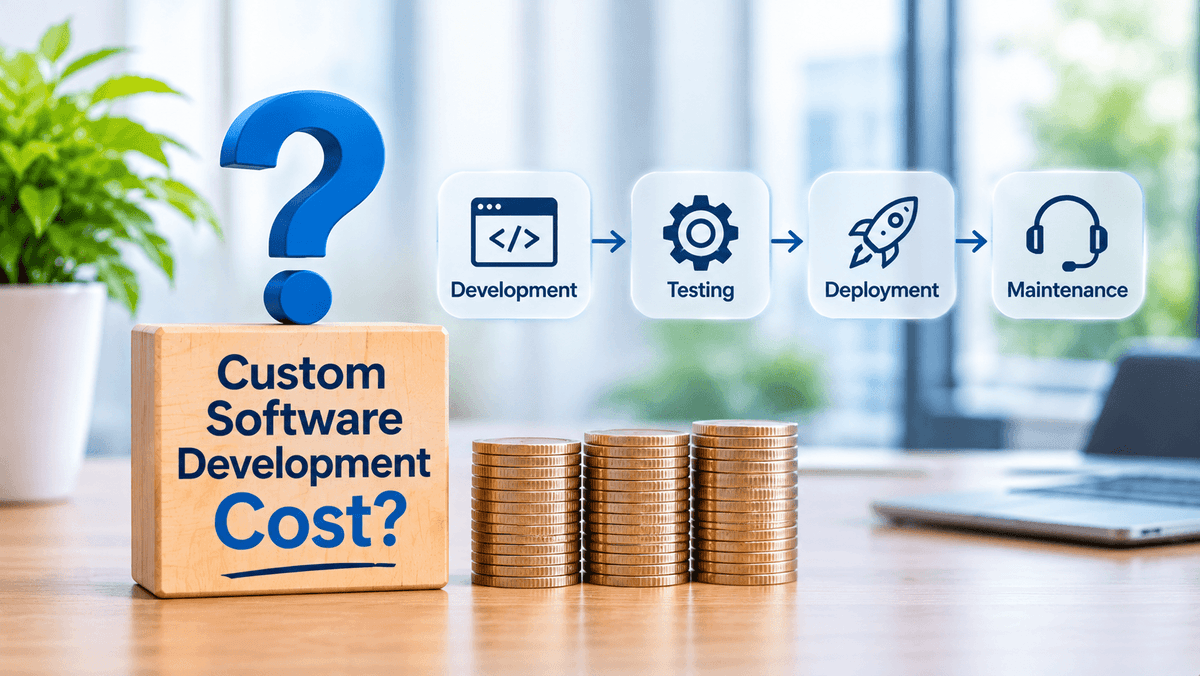
7. Deployment and Ongoing Maintenance
The development budget should not end with the first release.
After deployment, software may require hosting, infrastructure management, monitoring, security updates, bug fixes, and feature improvements.
Common ongoing costs include:
Area | Examples of ongoing expenses |
Hosting and infrastructure | Cloud servers, databases, storage, and bandwidth |
Maintenance | Bug fixes, dependency updates, and technical support |
Security | Monitoring, patches, and security reviews |
Third-party services | API usage, email services, and software subscriptions |
Enhancements | New features and improvements based on user feedback |
Planning for these expenses helps businesses understand the total cost of owning and operating software, not just the initial development investment.
How Does Software Development Cost Differ by Project Type?
Different types of applications require different levels of planning and technical effort.
Project type | Typical requirements | Factors affecting cost |
Business website | Pages, CMS, forms, and integrations | Design, content structure, and custom functionality |
Internal business application | User roles, workflows, and dashboards | Business logic and reporting requirements |
Customer portal | Accounts, permissions, and self-service features | Authentication, integrations, and user experience |
SaaS product | Multi-user access, subscriptions, and administration | Architecture, billing, scalability, and security |
Marketplace platform | Buyers, sellers, listings, and transactions | Payments, workflows, notifications, and moderation |
AI-powered application | AI models, data sources, and automated workflows | Model selection, data preparation, integrations, and usage costs |
These categories are not fixed pricing packages. A simple SaaS application may require less effort than a highly customized business portal, depending on the features and architecture involved.
A reliable estimate requires understanding the actual requirements rather than assigning a price based only on the project type.
MVP vs Full-Scale Software: Which Should You Build First?
Businesses developing a new product often face a choice between launching a smaller initial version or investing in a complete platform from the beginning.
An MVP (Minimum Viable Product) focuses on the essential functionality needed to test the product with real users.
Consideration | MVP development | Full-scale development |
Main objective | Validate the product idea | Deliver a broader product experience |
Feature scope | Essential functionality | Wider feature set |
Initial investment | Usually lower | Usually higher |
Development approach | Focused initial release | More extensive implementation |
User feedback | Used to guide future development | Incorporated across a larger product |
Future expansion | Planned through iterations | May include more functionality from the start |
For startups and businesses testing a new software idea, an MVP can help reduce the risk of investing heavily in features before understanding user requirements.
However, an MVP should still have a suitable technical foundation. Cutting essential security, architecture, or quality requirements can create problems when the product begins to grow.
Which Software Development Pricing Model Should You Choose?
The engagement model also affects how development costs are estimated and managed.
Three common approaches are used for custom software projects.
1. Fixed-Cost Model
A fixed-cost model works well when the project scope, deliverables, and acceptance criteria are clearly defined.
The development team estimates the work and agrees on a project price before implementation begins.
Suitable for:
Projects with clearly documented requirements.
Defined deliverables and timelines.
Smaller applications or specific development phases.
Changes outside the agreed scope may require additional estimates.
2. Hourly Development Model
In an hourly model, businesses pay for the actual development time used.
This approach provides flexibility when requirements are evolving or when the project involves investigation, troubleshooting, or ongoing improvements.
Suitable for:
Projects with changing requirements.
Development tasks with uncertain scope.
Enhancements to existing applications.
Technical support and maintenance.
Budget tracking and regular progress reviews help keep the engagement under control.
3. Dedicated Development Team or Monthly Engagement
A dedicated development model provides access to development resources working continuously on a client's project.
It can be useful when a product requires ongoing development, regular releases, or a longer-term engineering commitment.
Suitable for:
SaaS products with continuous development needs.
Businesses building and extending custom applications.
Projects with changing priorities.
Teams that need consistent development capacity.
The monthly investment depends on team size, experience, roles, and engagement requirements.
How to Reduce Software Development Costs Without Compromising Quality
Reducing costs does not necessarily mean choosing the cheapest development option. It means using the available budget effectively.
Consider these practical steps:
1. Define requirements before development.
Document the business problem, expected users, essential features, and project objectives. Clear requirements make estimates more reliable.
2. Prioritize features.
Separate must-have functionality from improvements that can be introduced later.
3. Choose suitable technologies.
Select a technology stack based on the application's requirements and long-term support needs, rather than following trends.
4. Reuse existing services where appropriate.
Established payment, authentication, communication, and cloud services can reduce the need to build every component from scratch.
5. Validate designs early.
Review wireframes and prototypes before substantial development begins. Early feedback can prevent costly changes later.
6. Test throughout development.
Identifying problems during implementation is generally easier than fixing them after deployment.
7. Plan for future improvements.
Use an architecture that supports reasonable expansion without overengineering the first release.
How to Prepare a Realistic Software Development Budget
Before requesting a development estimate, businesses should prepare a basic project brief.
The following checklist can help:
Planning area | Questions to answer |
Business objective | What problem should the software solve? |
Target users | Who will use the application? |
Core features | What must be included in the first release? |
Platforms | Is it a web application, mobile app, or both? |
Integrations | Which existing systems or external services are involved? |
Security | What data protection and access requirements apply? |
Timeline | Is there a target launch date or phased delivery plan? |
Future scope | What improvements may be needed after launch? |
A development team can use this information to assess the project, identify technical dependencies, estimate effort, and recommend an appropriate implementation approach.
It is also useful to clarify what the estimate includes, such as UI/UX design, development, testing, deployment, project management, and post-launch support.
How Vivansh Infotech Can Help
Vivansh Infotech provides custom software development services for businesses looking to build, improve, and scale digital products.
Our development approach focuses on understanding business requirements, selecting suitable technologies, and planning implementation around the product's actual needs.
Our services include:
Custom Software Development
Build business applications, customer portals, workflow systems, and software solutions tailored to specific requirements.
SaaS Product Development
Develop SaaS platforms with user management, subscription workflows, dashboards, integrations, and scalable architecture.
MVP Development
Turn product ideas into functional first versions that help businesses validate requirements and gather early user feedback.
Web and Mobile Application Development
Create responsive web applications and mobile experiences for different business use cases.
UI/UX Design
Plan user journeys, interfaces, and prototypes before development to improve usability and reduce unnecessary rework.
Ongoing Development and Maintenance
Extend existing applications, introduce new features, improve performance, and support changing business requirements.
The right engagement model depends on the scope and development needs of each project. We work with businesses through fixed-cost projects, hourly engagements, and dedicated development arrangements.
Explore our custom software development services to learn more about how we approach software projects.
Frequently Asked Questions
How much does custom software development cost?
There is no universal price for custom software development. The cost depends on features, project complexity, technology requirements, integrations, security, testing, and development effort. A technical assessment helps establish a realistic estimate.
Why does custom software development cost vary between companies?
Different development companies may use different estimation methods, team structures, technology choices, and delivery processes. The final estimate also depends on how clearly the requirements and deliverables are defined.
Is MVP development cheaper than building a complete product?
An MVP generally requires a smaller initial scope, so the initial investment is often lower. It focuses on essential functionality, allowing businesses to validate their product before expanding it.
What is included in a software development estimate?
Depending on the project, an estimate may include requirement analysis, UI/UX design, frontend and backend development, database setup, integrations, testing, deployment, and project management. Always confirm which services are included.
Which is better: fixed-cost or hourly software development?
Fixed-cost development is suitable for projects with clearly defined requirements. Hourly development offers more flexibility when the scope may change. The choice depends on the project's uncertainty, deliverables, and working approach.
Does software development include maintenance after launch?
Not automatically. Maintenance may be included in a separate support agreement or ongoing development arrangement. Businesses should clarify post-launch support, bug fixes, security updates, and future enhancements before starting.
How can I get an accurate estimate for my software project?
Prepare a brief outlining the business objective, target users, essential features, integrations, platform requirements, and expected timeline. A development team can review these details and provide a more informed estimate.