Why Startups Should Focus on Core Features When Building an MVP

Key Takeaways
- 1Focus on essentials: Build the features that solve the main problem first.
- 2Launch faster: A smaller feature set can help reduce development time.
- 3Manage your budget: Avoid spending money on features that users may not need.
- 4Understand your users: Collect feedback after launch to make better product decisions.
- 5Plan for growth: Keep the development structure flexible for future improvements.
- 6Keep quality in mind: A simple MVP should still be reliable, secure, and easy to use.
Starting a new business or launching a software product often begins with an idea. But turning that idea into a working product requires careful planning, especially when time and budget are limited.
This is where a Minimum Viable Product (MVP) becomes useful.
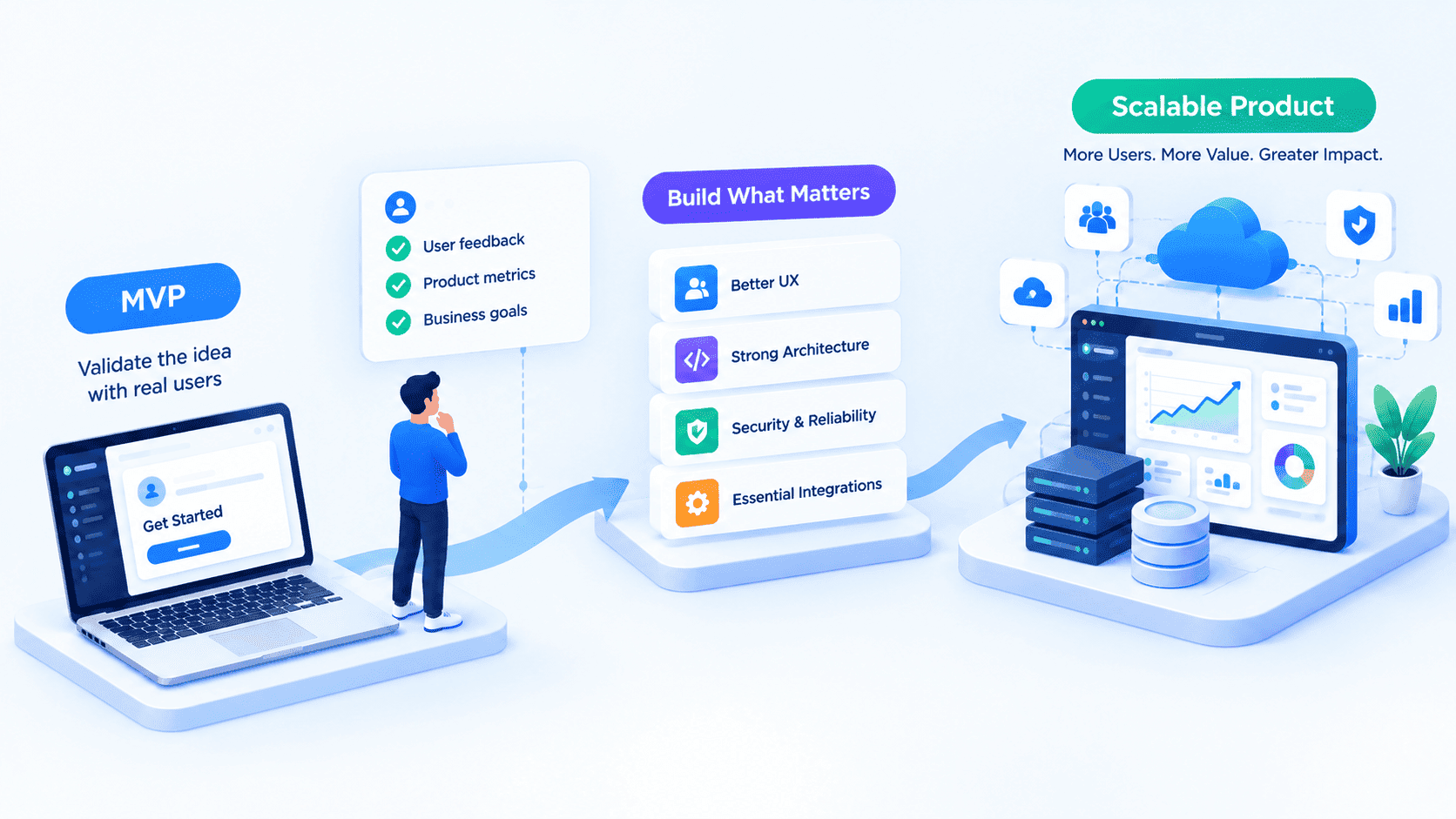
An MVP is an early version of a product that includes the main features needed to solve a particular problem. It allows startups to introduce their idea to real users, collect feedback, and understand what improvements are needed.
One common mistake startups make during MVP development is trying to build everything at once. They often want to include advanced features, multiple integrations, custom dashboards, and other options before knowing whether users actually need them.
Instead of making the product better, this can make development more expensive and delay its launch.
Focusing on core features helps startups keep the first version simple, launch with a clear purpose, and make better decisions about future development.
What Are Core Features in MVP Development?
Core features are the main functions that make a product useful to its intended users.
They are directly connected to the problem the product is designed to solve. Without these features, the product may not deliver its main purpose.
For example, consider a startup planning to build an online appointment booking platform.
The main features might include:
User registration and login.
Service or appointment selection.
Available time slots.
Appointment booking.
Booking confirmation.
These features are enough to introduce the basic booking experience.
The goal is not to build an incomplete product. It is to build a product with the right features for its first release.
Which Features Should Be Included in an MVP?
Choosing the right features is one of the most important parts of MVP planning.
Not every feature that sounds useful needs to be included in the first version. Startups should focus on what users need to complete the main task the product is designed for.
The following table shows how features can be prioritized for different types of products.
Product Type | Core Features for MVP | Features to Consider Later |
SaaS application | User login, dashboard, main product functionality | Advanced analytics, automation, custom reports |
Food delivery platform | Restaurant listings, ordering, payments, order status | Loyalty programs, subscriptions, promotions |
Booking platform | Service listings, availability, booking confirmation | Advanced recommendations, reward points |
CRM software | Customer records, contact management, activity tracking | AI insights, advanced automation, custom reports |
E-commerce platform | Product listings, shopping cart, checkout | Loyalty programs, personalized recommendations |
These are general examples. The actual features will depend on the business idea, target users, and the problem the product needs to solve.
Common Mistakes Startups Should Avoid During MVP Development
Even with a clear idea, startups can make decisions that increase development time and create unnecessary challenges.
Here are some common mistakes worth avoiding.
Common Mistake | Why It Can Be a Problem | Better Approach |
Adding too many features | Increases development time and cost | Focus on essential functionality |
Skipping user research | The product may not match actual user needs | Understand your target audience |
Ignoring testing | Basic issues may affect the user experience | Test important features before launch |
Choosing technology without planning | Future changes may become difficult | Select technology based on project requirements |
Trying to make everything perfect | Can delay the first release | Launch a reliable and usable first version |
Ignoring future improvements | The product may become difficult to maintain | Plan a flexible development structure |
One important thing to remember is that an MVP should still be reliable.
Keeping the feature list small does not mean ignoring security, testing, performance, or the basic user experience. These are important parts of building a product that people can actually use.
Building an MVP With the Right Development Approach
A successful MVP starts with a clear understanding of the business idea and the problem it needs to solve.
At Vivansh Infotech, we work with businesses and startups to develop custom software, web applications, SaaS platforms, and AI-powered solutions based on their requirements.
Whether you are starting with a new product idea or planning to improve an existing MVP, choosing the right features and development approach can make a difference.
Our team can help with product development, backend development, frontend development, and ongoing improvements as your product grows.
The objective should be to build something useful, test it with real users, and improve it based on what you learn.
A focused MVP gives startups a practical starting point without investing too much in features they may not need.
Frequently Asked Questions
Why are core features important in MVP development?
Core features help startups focus on the main purpose of their product. They make it easier to launch the first version, manage development costs, and understand what users actually need.
How many features should an MVP have?
There is no fixed number of features for an MVP. It depends on the type of product and the problem it needs to solve. The focus should be on including only the essential functionality required for the first release.
Can startups add more features after launching an MVP?
Yes. Startups can introduce additional features based on user feedback, product usage, and changing business requirements. This allows the product to improve gradually.
Does building an MVP reduce development costs?
It can help reduce initial development costs because the team focuses on essential features instead of building a complete product from the beginning. However, the actual cost depends on the project's complexity and technical requirements.
Should an MVP be fully tested before launch?
Yes. Even a basic MVP should be tested to make sure its main features work correctly. User login, data handling, security, and important workflows should be checked before making the product available.
Can an MVP become a full SaaS product?
Yes. Many SaaS products begin with a smaller set of features and grow over time. After understanding user needs and market response, startups can introduce more functionality, integrations, and improvements.